Ordos are no longer printed for these rubrics. This is one for the Roman Rite as it was kept from 1900 to 1911, under the Tridentine books and rubrics, before St. Pius X’s Divino Afflatu reform took effect on 1 November 1911. Those rubrics are applied here to the present-day calendar.
What it is
The Office and Mass of each day are computed from the rubrics themselves: which feast is kept when two fall together, what is transferred and what is omitted, the octaves, the commemorations, and the concurrence of Vespers, with the Mass, colour, Preface, Gloria and Credo, and the hours of the Office that follow from them. It is an ordo for the universal Roman calendar, made for those who keep, or wish to follow, these rubrics.
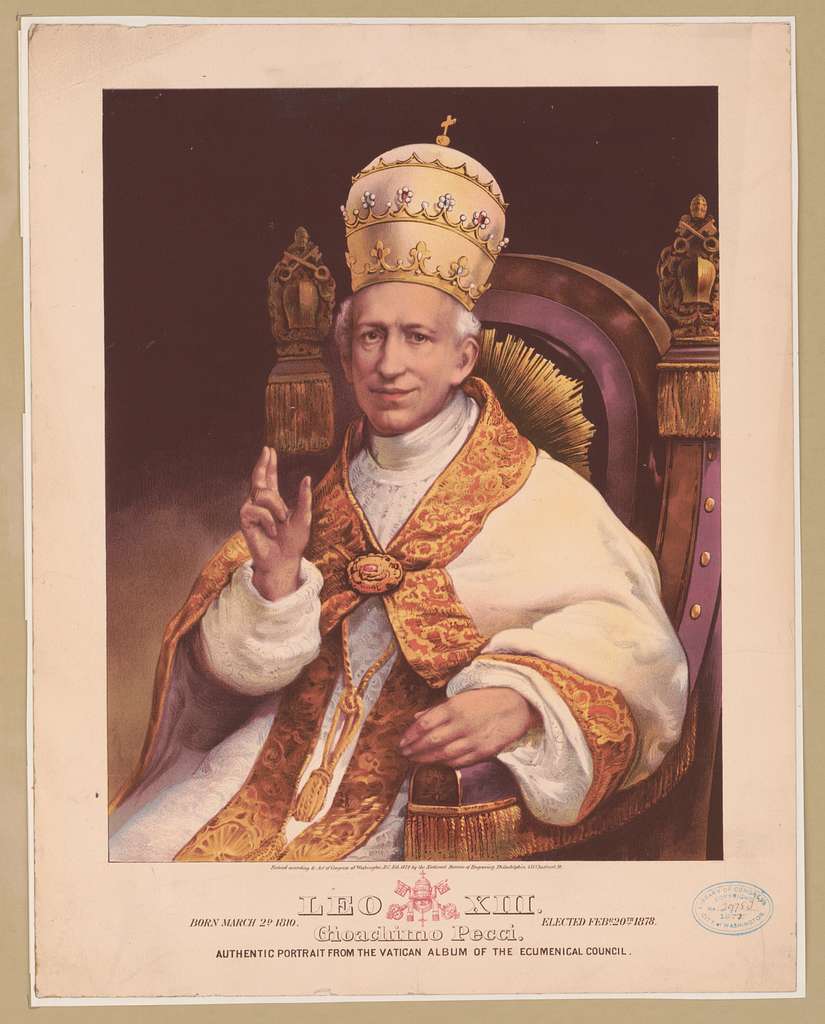
Local and particular material is not shown: diocesan and religious proprias, the Proprium Cleri Romani, and feasts peculiar to one country. Where a printed directory of the period gave such a feast, it was recognised as local and left out. The reigning pope, Leo XIV, is named only for the anniversary of his coronation.
Sources
The rules are taken from these books and directories of the period:
- The rubrics. The Rubricae Generales of the Breviary (Pustet 1902, collated against Pustet 1901 and Mame 1898) and of the Missal (Mame 1882, collated against Desclée 1889), given in full on the Rubricae Generales page, together with the Breviary’s two tables of occurrence and concurrence (Tables).
- The calendar and ranks. The Kalendarium and the classification of feasts printed in the Breviary of 1901–02, with the decrees of the Sacred Congregation of Rites it cites, including the catalogue of primary and secondary feasts (27 August 1894 and 5 February 1895; the 1901–02 Breviary prints 1893).
- Printed ordos, twelve years. The Australasian Catholic Directory, 1900–1911, read entry by entry, keeping to its universal entries and setting aside those marked as particular to the Roman clergy or to Ireland.
- Independent witnesses. The Scottish Catholic Directory, 1900–1911, and the Benziger Ecclesiastical Diary and Ordo for the United States, 1908.
- Ceremonial. The Caeremoniale Episcoporum (1886), for the organ and similar points of practice.
The printed ordos give the local feasts of their own countries, which are left out here; where no second directory covers a day, the rubrics and the Kalendarium decide it.
The Tridentine rubrics
The rubrics followed are those of the Breviary and Missal of St. Pius V, as revised by Clement VIII and Urban VIII and as applied by the decisions of the Sacred Congregation of Rites down to 1911. In practice this means:
- Feasts are ranked as Doubles of the first and second class, Doubles major and minor, Semidoubles and Simples, and same-class feasts are settled by the primary and secondary lists.
- A Double that falls on an ordinary Sunday is kept and the Sunday is commemorated; the privileged Sundays, and the days named in the rubrics, take precedence over a Double, which is then transferred or commemorated.
- Octaves are commemorated by the named list of feasts, not by a rule of rank, and Sundays within octaves keep their own Offices.
- Vespers are settled by the concurrence table of the Breviary: the whole of the preceding, or of the following, or a division from the Chapter.
- The days on which a Sunday moves a feast are fixed by the rubrics of that period, for example the Patronage of St. Joseph on the third Sunday after Easter, the Precious Blood on the first Sunday of July, the Seven Dolours on the third Sunday of September and the Holy Name of Mary within the octave of the Nativity of Our Lady.
- Masses for the dead follow the Missal, Rubr. Gen. V. On the first free day of each week (Monday, or the next day with a feria or a Simple when Monday is taken by a Double or Semidouble) the principal Mass may be a Mass for the dead. Where the day has a Simple, a feria with its own Mass, or the resumed Mass of a Sunday, the Mass of the day is said and the dead are remembered by the oration Fidelium. It is said second, the other orations move down, and the total stays at three. That is why some ordinary days show Fidelium among the Orations, and a line noting that the principal Mass may be for the dead. It does not apply in Lent or Paschaltime, on Sundays, or on vigils, Ember days and days within octaves.
- The Psalter is the Roman Psalter of the Breviary of Pius V, with its own ferial distribution, Preces and Suffrages.
What Pius X changed later, which is not here
The Apostolic Constitution Divino Afflatu (1 November 1911) and the rubrical changes that followed it altered much of this. None of it is applied in this ordo:
- The Psalter. The Psalms are not redistributed over the week; the older Roman Psalter is kept.
- Precedence. The new rule that gives a Sunday, a privileged feria or a vigil precedence over most feasts is not used; the older rules of occurrence and transfer stand.
- Octaves and commemorations. The reduction of octaves and of commemorations, and the rank-based rules for them, come after this period.
- Fixed dates. The feasts that the reform fixed to a date are kept where the earlier rubrics put them, on a Sunday, and not on the dates the reform gave: the Holy Name of Mary (12 September), the Seven Dolours (15 September), St. Joachim (16 August), the Precious Blood (1 July) and the Holy Name of Jesus (2 January).
- Holydays. The holydays of obligation marked are those of the present universal law (Code of Canon Law, can. 1246 §1): every Sunday and ten feasts. Local transfers and dispensations are not shown.
- Later rubrics. The Additiones et Variationes of the Breviary and Missal, printed in the typical editions of 1920, and every rubrical change after 1911 are outside this ordo.
Contact
If a day here differs from a book you hold, please report it, with the date and the book and page. Questions and comments are welcome.